-
Nutrition
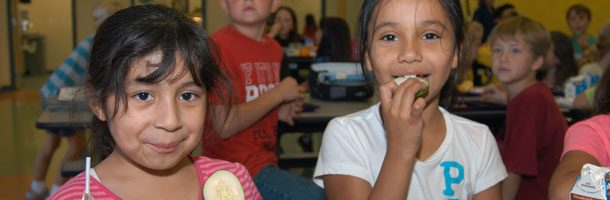
 The National Institutes of Health is currently funding our project called "Lunch is in the Bag". With 73% of US children ages 3-5 in regular non-parental care, childcare is a very important setting for encouraging parents to increase young children's opportunities to eat and enjoy fruits, vegetables and whole grains; despite this opportunity, few studies have been conducted in childcare settings.
The primary aim of this proposal is to evaluate Lunch is in the Bag, an intervention to encourage parents to increase the availability of fruits, vegetables, and whole grains in sack lunches for their preschool children in childcare centers. The ultimate goal for this research is the development of new strategies for the promotion of healthy eating practices in children through childcare centers, which will decrease their risk of cancer and other chronic diseases later in life. The intervention includes 5 weekly parent handouts, along with center based parent and child activities to reinforce concepts in the handouts, followed by a booster activity three months after the initial intervention.
Outcome measures include changes in (1) the amounts of fruits, vegetables, whole grains, chips, and sweets packed in the sack lunches; (2) the amounts of these foods consumed by the children; (3) parent knowledge, norms and intention; (4) teacher support and awareness; and (5) center environment to support a healthy diet
-
 Physical Activity
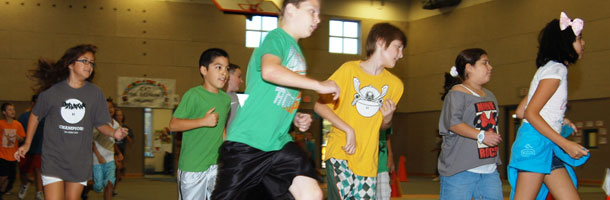
The Directors of Health Promotion and Education have funded the "Active Texas 2020" with the objective being to promote disease prevention and health promotion by helping organizations and multiple sectors make physical activity and exercise as important a health priority as tobacco control and good nutrition.
A 10-year blueprint detailing proven strategies that will help schools, medical care organizations, employers, municipal leaders, transportation planners, parks and wildlife leaders and community leaders find and implement proven strategies for helping make exercise and physical activity a health priority throughout the State of Texas. Investigators in the Michael & Susan Dell Center for Advancement of Healthy Living conceptualized and are leading this effort.
Working with Governor's office, Texas Department of State Health Services, Texas Education Agency, health and medical care providers throughout the state, and various municipal leaders from throughout Texas, this project has the potential of affecting the lives of all Texans by improving health through promotion of exercise and physical activity.
-
 Health Education
Funding was provided by the Centers for Disease Control and Prevention for the purpose of revising the current CATCH curriculum "CATCH Nutrition Plus" which is the current guide for the CATCH Kids Club after-school Program. The goal was to adapt a cardiovascular health promotion school-based nutrition intervention for obesity prevention and control. The primary goal of this study was to revise the original CATCH curriculum which is focused on prevention of cardiovascular risk factors to an obesity prevention program. The revised curriculum will be tested in 8 schools.